
Hockey Net Rules
Colonel John Desmond Hammond, one of Tex Rickard’s “millionairesâ€, part owner of Madison Square Garden and President of the New York Rangers NHL franchise, had tussled over the summer of 1930 with Lester Patrick, hoping to take personal control of the hockey side of the business from the Silver Fox (The Montreal Daily Star, October 15, 1930, p.35, c.5). Hammond lost that struggle to the most creative and adventurous, fan-sensitive, hockey executive in the world.
Hammond was still concerned about his hockey team’s scoring. He was affronted that his team had only scored 17 goals in 8 games, and 14 of those had been counters in their three against the lowly Philadelphia Quakers. In 5 games against the better competition in the rest of the League, the Rangers had been shut out 3 times, and scored only 3 times.
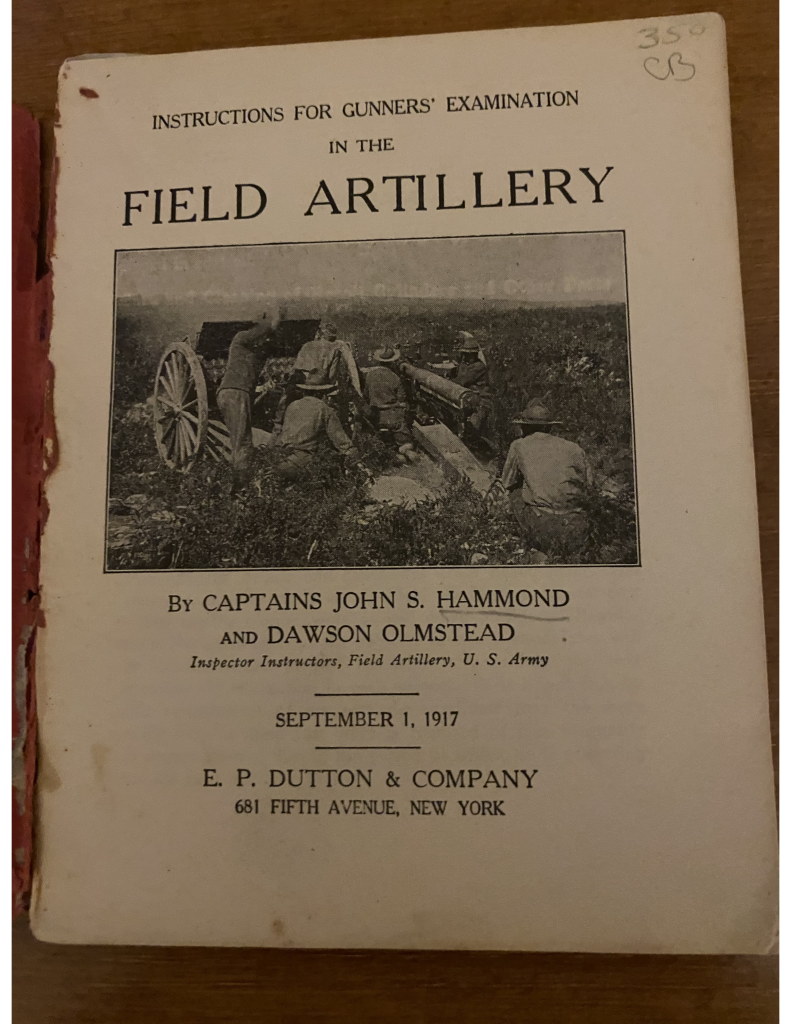
Hammond had First World War credibility as a Gunner, and had written the book on the use of Field Artillery. He believed that he understood what hockey needed to know about successfully hitting targets. Fundamentally, he wanted a bigger net.
The League’s problem was that they had tried to fix the dearth of scoring a year earlier. In the fall of 1929, when the league decided to allow forward passing inside the opponent’s zone, there was no restriction as to who, or what, crossed the blue line first:
The rule . . . permitted players to go down to the defending cage and wait for teammates to bring the puck down, similar to a “basket-hanger†in basketball. (The Gazette, December 17, 1929)
That ill-considered forward passing rule was changed again in December, 1929, to forbid “any player on the attacking side crossing his opponents’ blue line ahead of the puck,†thus eliminating the “net–suck†from NHL play after about 12 games.
Hammond believed that yet another rule adjustment was needed to prime the goal-scoring pump. Goaltenders had been defending the standard net [4 feet high and 6 feet wide] since at least 1897, if not longer.
Being an artillery man, Colonel Hammond understood that if you wanted to make shooters more successful, you needed to enlarge the target. Hammond’s brainwave solution for his low scoring Rangers was be to enlarge the size of the goal nets. He went public with this idea as the Rangers arrived in Montreal for their game with the Canadiens on Thursday night. It was bold. Instead of goaltenders defending a net that was 4 feet high and 6 feet wide, as had been the standard since at least 1897, Hammond was suggesting a net that was 4 feet high and 7 feet wide (The Montreal Daily Star, Thursday, December 4, 1930, at p.40, c.7).
The 4 x 6 net had been invented in stages. Ontario Hockey Association Rules adopted in 1897 had required a goal to be “two upright posts, four feet in height, placed six feet apartâ€, and stipulated that a score would occur when the puck passed “between the goal posts from in front and below an imaginary line drawn across the tops of the posts.â€: as reproduced in Hewitt, W.A., Down the Stretch, The Ryerson Press (Toronto:1958), at pp.181 – 182; and McFarlane, Brian; Stanley Cup Fever: 100 Years of Hockey Greatness, Stoddart Publishing Co. Limited (Toronto:1992), at pp.18 – 19.
Actual nets hung on the framework of posts and crossbar became standard in 1900 according to Young, Scott, 100 Years of Dropping the Puck: A History of the OHA, McClelland & Stewart Inc. (Toronto:1989), at pp.85, 144; but attributed to Percy LeSueur’s patent in 1911, which was adopted by the National Hockey Association: Kitchen, Paul; Win, Tie or Wrangle: The Inside Story of the Old Ottawa Senators 1883 – 1935, Penumbra Press (Manotick, Ontario:2008), at p.178.
Credit for invention of the NHL’s net has also been attributed to Art Ross: Irvin, Dick; Behind the Bench: Coaches Talk about Life in the NHL, McClelland & Stewart Inc. (Toronto:1993), at p.30; and Fitsell, J. W., Hockey’s Captains, Colonels & Kings, The Boston Mills Press (Erin, Ontario:1987), p.109.
While the NHL has resisted a series of temptations to change the size the net for more than a century, Hammond’s advocacy for a bigger net has resurfaced time and again: e.g., MacGregor, Roy, Road Games: A Year in the Life of the NHL, Macfarlane Walter & Ross (Toronto:1993), at p.42; Hood, Bruce, with Townsend, Murray; The Good of the Game: Recapturing Hockey’s Greatness, Stoddart Publishing Co. Limited (Toronto:1999), pp.229 – 230.
A surprising supporter of Hammond’s bigger net idea was Conn Smythe in Toronto. Through the winter of 1930 – 1931, he arranged to test nets which were 7 feet, six inches wide, in Toronto’s Mercantile (or Metropolitan, or Manufacturer’s) League (The Montreal Daily Star, February 11, 1931, p.29, c.5; February 18, 1931, p.27, c.2 – 3). League results tended to dampen excitement about the idea (e.g., The Montreal Daily Star, March 2, 1931, p.23, c.4 – 5).
Hockey net dimensions of today remain the same as they were even before Howie Morenz was born.