The Statistically Invisible Portion of the Morenz Game
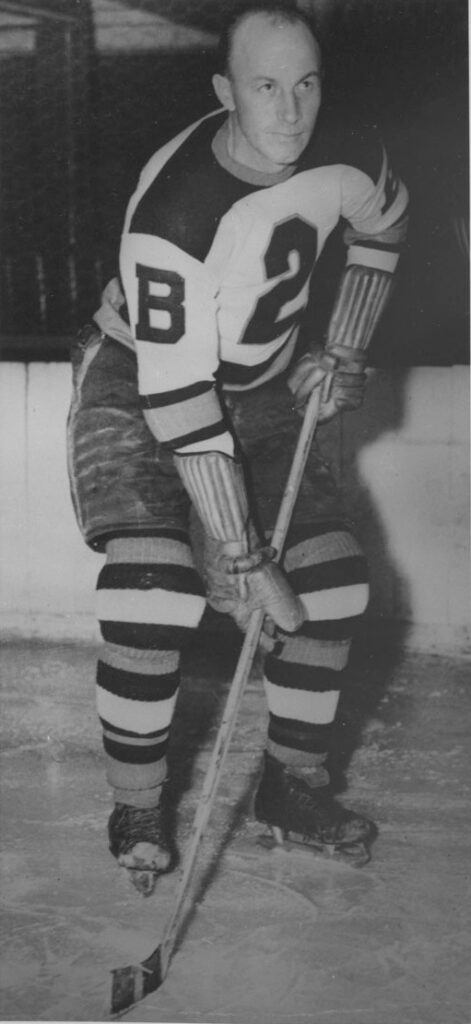
The physical competition between Howie Morenz and Eddie Shore was often the chief delight of a game between the Bruins and Canadiens – not only for Garden fans, but for professional hockey fans everywhere. They also understood that the only true measure for any player is how he performs against the best of his opponents.
It was an idea that resonated for a whole generation, or two:
Shore occupies a unique place in hockey history. He was the best. His worst enemy (and you’d have to sift through a monstrous crowd of candidates to locate that gentleman) would give him no less than a tie with the equally immortal Howie Morenz as the greatest player the game has produced. Still, he always has been almost universally resented, disliked, even hated.
Fitzgerald, Ed; “Eddie Shore: ‘Old Blood and Guts’ of Hockey”, Sport, at p.50
Shore was born in northern Saskatchewan, and worked his way up the amateur and professional hockey ladder in western Canada. Shore’s pre-NHL experience was primarily with the Regina Capitals (1924 – 1925) and Edmonton Eskimos (1925 – 1926). He arrived in the NHL with the Bruins in 1926 as “the galloping cowboy,”: Hiam, C. Michael; Eddie Shore and That Old Time Hockey, McClelland and Stewart (Toronto:2011), at pp.57, 62, just before turning 24.
His physical stamina was legendary when he played, and remains so decades later. A farmer in his off-seasons, remarkable physical strength coupled with prodigious stamina allowed him to play more than 600 NHL games over 15 seasons, and often 60 minutes a game.
Despite a late start in learning the game, and in spite of a stiff and sometimes awkward-appearing skating style, he overcame his lack of childhood instinct for the game. He learned, or more fairly taught himself, how to make himself successful. Until he had established himself on merit, he had learned the subterfuge of faking injuries for the benefit of the attention of both the referees and the fans: Per Frank Frederickson: Fischler, Stan; Those were the Days, Dodd, Mead & Company (New York:1976), at p.55
Playing hockey like he might have rassled cattle, Shore set penalty records from the time of his arrival in the NHL, gave and received wounds, ended careers of opponents on slight pretext (the most well-known and documented being Ace Bailey of the Toronto Maple Leafs on December 12, 1933), and freely slugged goal judges and referees. His eventual ability to inflict serious harm to his opponents created enough fear and space on the ice to enable him to both defend, and to score important goals.
According to Cooper Smeaton, Shore could be nasty, dangerous, a madman, and a threat to the lives of other players: Fischler, Stan; Those were the Days, Dodd, Mead & Company (New York:1976), at p.38, but see p.187; Fischler, Stan and Fischler, Shirley, Heroes and History: Voices from the NHL’s Past, McGraw-Hill Ryerson Ltd. (Toronto:1993), at p.34. See also: Hiam, C. Michael; Eddie Shore and That Old Time Hockey, McClelland and Stewart (Toronto:2011), at pp.111, 187 – 188. Shore and Smeaton did have a very personal history.
Partisan opposing media and opposing fans would often find themselves wishing that they would see Shore harmed, damaged, and physically injured in retribution for his effective play against his opponents: Columnist G.D. Lawrence congratulated Shore for “fooling the wise ones by not staging any manslaughter”Montreal Herald, February 9, 1931. That became a primary element of his fascination for opposing fans:
Apart from his native ability and flamboyance, Shore had a perverse appeal to enemy fans and players alike.
Fischler, Stanley I., Power Play!: The Story of the Toronto Maple Leafs, The Copp Clark Publishing Company (Toronto:1972), at p.83.
Kyle Crichton cleverly described this fascination for opposing fans as their hope that some night they would see him “be severely killed.”
Attributed to Kyle Crichton (1934), by Hiam, C. Michael; Eddie Shore and That Old Time Hockey, McClelland & Stewart (Toronto:2011), at p.4; to Collier’s by Sullivan, George, Face-off: A Guide to Modern Ice Hockey, D. Van Nostrand Company, Inc. (New York:1968), p.74.
Whatever the fundamental cause, well-followed columnist Ring Lardner correctly observed that because of this reputation:
Eddie Shore is the only man in hockey who is generally known to people who ignore hockey.
Sullivan, George, Face-off: A Guide to Modern Ice Hockey, D. Van Nostrand Company, Inc. (New York:1968), p.120. The only other hockey players who might have attained that kind of notoriety would likely have been Wayne Gretzky, Rocket Richard, and Howie Morenz himself.
Stripping away the antipathy and perhaps hatred directed at Shore by ticket-buying and media partisans, he remains one of the most unique contributors to the development of hockey as a game of skill. Considered that way, we can understand from an historical perspective how the most respectful nickname for Shore, given by the men who actually played with him, remains “Lone Wolf.”
Stan Fischler argues, with strong support from Peter Gzowski, that Eddie Shore actually imposed his personality on the Bruins, and gave the team its enduring character: Fischler, Stan; Bobby Orr and the Big, Bad Bruins, Dodd, Mead & Company (New York:1969), at pp.141 – 144.
Shore himself explained his attitude towards the game this way:
I play a wide-open style of hockey. I go down the ice expecting to be body-checked and I expect to check any one and every one who gets in my path. When you play that kind of hockey, it is easy to get a ‘bad man’ reputation from everybody but the fellows who play hockey. No pro player is a ‘bad man.’ . . . I have never done anything to an opponent that I would not take myself. If you watch me during the average season you will note I digest just as much and probably a bit more punishment than I give.
The Globe, March 11, 1931, p.9, c.2
Frank Selke thought highly of him:
. . . for sheer power and irresistible force, Eddie Shore stands alone. In his good days with the Boston Bruins, Eddie combined skating skill with brute force, to fairly bull his way through the opposition. The Maple Leafs always detailed two men to cope with Shore’s rushes. They would turn and skate with him in an endeavour to get him on his wrong side. Eddie had no backhand shot to speak of. He was certainly a colourful player, as good a defenceman as ever lived; what’s more, he dedicated his whole life to the good of hockey.
Selke, Frank J., with Green, Gordon; Behind the Cheering, McClelland and Stewart Limited (Toronto:1962), p.175
Bill Hewitt took a similarly appreciative view of Shore’s inherent qualities as a hockey player: Hewitt, W.A., Down the Stretch: Recollections of a Pioneer Sportsman and Journalist, The Ryerson Press (Toronto:1958), p.212.
The man who bought him for the NHL, Charles F. Adams, was less sophisticated but just as enthusiastic about him:
Eddie Shore was made for Boston. Tough, Scrappy, Mean. A rushing defenceman who could take charge. The Boston fans didn’t know hockey in those days, but you didn’t have to know hockey to get delirious over Shore.
O’Brien, Andy; Superstars: Hockey’s Greatest Players, McGraw-Hill Ryerson Limited (Toronto:1973), at p.87. See also: Fischler, Stan, and Fischler, Shirley; Everybody’s Hockey Handbook, Charles Scribner’s Sons (New York: 1983), at p.266
The Bruins and Shore himself sometimes fed this caricature of Shore as a monster of violence. For example, in January 1930, Boston Gardens’ matchmaker Eddie Mack offered to arrange a fight involving Shore and Alfred (The Great) Shires – a Lowell, Massachusetts welterweight: The Gazette, January 14, 1930, p.16, c.4 That caricature persisted for decades in highlighting the most malevolent perspective of his character: e.g., Cruise, David, and Griffiths, Alison; Net Worth: Exploding the Myths of Pro Hockey, Viking (Toronto:1991), at pp.166 – 192; Sittler, Darryl, and Goyens, Chrys, with Turowetz, Allan; Sittler, Macmillan Canada (Toronto:no date), at p.15; Kilrea, Brian, as told to Davidson, James; Killer: The Brian Kilrea Story, General Store Publishing House (Burnstown, Ontario:1993), at p.61; Frayne, Trent; It’s Easy All You Have to do is Win, Longman’s Canada Limited (Don Mills, Ontario:1968), at pp.116 – 117; Hood, Bruce, with Townsend, Murray; The Good of the Game: Recapturing Hockey’s Greatness, Stoddart Publishing Co. Limited (Toronto:1999), p.145; Cole, Stephen, The Last Hurrah, Penguin Books (Toronto:1995), at pp.110 – 117. See also: Fischler, Stan; Those were the Days, Dodd, Mead & Company (New York:1976), at p.203.
Regrettably, all of that hyperbole obscured the essential quality of the man as a hockey player in exactly the same way as the caricature of Ty Cobb detracted from his varied skills as a ballplayer: Gallico, Paul; The Golden People, Doubleday & Company, Inc. (Garden City, NY:1965), at pp.200 – 203.
Johnny Gagnon appreciated both aspects of Shore:
Eddie Shore was . . . sneaky. In those days there used to be only one official and naturally he couldn’t see everything. So when he wasn’t looking Shore would give it to me. I’ll never forget the first time I played against him; he knocked me cold. When I got up he said, “Kid, next time you keep your head up!” That turned out to be good advice and I kept my head up after that.
Fischler, Stan; Those were the Days, Dodd, Mead & Company (New York:1976), at p.150; Fischler, Stan and Fischler, Shirley, Heroes and History: Voices from the NHL’s Past, McGraw-Hill Ryerson Ltd. (Toronto:1993), at p.64.
Not all of Gagnon’s story can be accurate. At the time when Gagnon first played against Shore, the NHL was still using a two-referee officiating system. There is also no record of Gagnon being knocked out by Shore (or anyone else) in his first game against Shore, which would have occurred on November 18, 1930.
Brian Kilrea, whose experience of Shore was as a coach, correctly said that “eccentric would be a better word for him than crazy, because he did dance to his own tune.”: Kilrea, Brian, as told to Davidson, James; Killer: The Brian Kilrea Story, General Store Publishing House (Burnstown, Ontario:1993), at p.60.
At the same time it is true that Shore’s pedagogical approach to teaching his understanding of the game often left his players with no sense of personal dignity: Frayne, Trent; The Mad Men of Hockey, McClelland & Stewart (Toronto:1974), at p.55; Fischler, Stan; Those were the Days, Dodd, Mead & Company (New York:1976), at p.64; and particularly goalies: Maggs, Randall; Night Work: The Sawchuk Poems, Brick Books (London, Ontario:2008), at p.60; Cherry, Don, with Fischler, Stan; Grapes: A Vintage View of Hockey, Avon Books of Canada (Scarborough, Ontario:1983), at pp.105 – 127.
It was said that Shore had little respect for players’ wives either: Cherry, Don, with Fischler, Stan; Grapes: A Vintage View of Hockey, Avon Books of Canada (Scarborough, Ontario:1983), at p.118. See also: Imlach, Punch, with Young, Scott; Hockey is a Battle, Goodread Biographies, Formac Publishing Inc. (Halifax, NS: 1969), at pp.48 – 51.
The unarguable fact is that he made some careers: e.g., Kent Douglas: Pagnucco, Frank; Heroes: Stars of Hockey’s Golden Era, Prentice-Hall Canada Inc. (Scarborough, Ont.:1985), at p.292; and was sometimes the excuse why some ended before they really began: e.g., Kilrea, Brian, as told to Davidson, James; Killer: The Brian Kilrea Story, General Store Publishing House (Burnstown, Ontario:1993), at pp.23 – 24, 31 – 33; per Ken Schinkel in Pagnucco, Frank; Heroes: Stars of Hockey’s Golden Era, Prentice-Hall Canada Inc. (Scarborough, Ont.:1985), at p.269; Buffey, Vern, Black and White and Never Right: A Hockey Referee, John Wiley & Sons Canada Limited (Toronto:1980), p.15. His reputation for damaging careers was enough to scare Tim Horton: Hunter, Douglas, Open Ice: The Tim Horton Story, Viking (Toronto:1994), at pp.150, 313.
While he was often physically raw on the ice, he played with intelligence: Percival, Lloyd; The Hockey Handbook, The Copp Clark Co. Ltd. (Toronto:1951), p.191.
He possessed an analytical turn of mind about the game that would eventually show himself to be a forward-thinking and influential theoretician about the game: Cruise, David and Griffiths, Alison, Net Worth, Viking (Toronto:1991), at pp.179 – 182; Fischler, Stan; Those were the Days, Dodd, Mead & Company (New York:1976), at pp.64 – 65.
Carl Brewer once described Shore as having the smartest hockey brain in North America. In the course of describing Father David Bauer, Brewer was quoted as saying that:
“Outside of Eddie Shore, he [Bauer] was the best hockey brain ever produced in North America.”
Dowbiggin, Bruce, The Defence Never Rests, HarperCollins Publishers Ltd (Toronto:1993), at p.131.
See also: Foster, Susan, with Brewer, Carl; The Power of Two: Carl Brewer’s Battle with Hockey’s Power Brokers, Fenn Publishing Company Ltd. (Bolton, Ont.: 2006), at p.262.
Several NHL players respected both what Shore had done playing the game, and in what he was able to teach: Fischler, Stan; Those were the Days, Dodd, Mead & Company (New York:1976), at p.186, particularly about the fundamental skill of skating: e.g., Bower, Johnny, with Duff, Bob; The China Wall: The Timeless Legend of Johnny Bower, Fenn Publishing Company Ltd. (Bolton, Ontario:2008), at p.152; Mahovlich, Frank; Ice Hockey: How to play it and enjoy it, Pelham Books (London, England:1964), at pp.23 – 24; Kilrea, Brian, as told to Davidson, James; Killer: The Brian Kilrea Story, General Store Publishing House (Burnstown, Ontario:1993), at p.24; Percival, Lloyd; The Hockey Handbook, The Copp Clark Co. Ltd. (Toronto:1951), p.192.
Red Storey observed how the Russians of 1972 copied his practice, training, skating, and game situation drills: Storey, Red, with Snyder, Brodie; Red’s Story, Seal Books (Toronto:1995), at pp.201 – 202.
Perhaps the greatest endorsement of Shore’s superior understanding of the game was described by Brian Kilrea, who observed that Shore’s understanding the game was so thorough, and his insistence on teaching the specifics so relentlessly, that several of his former players became successful coaches themselves: Kilrea, Brian, as told to Davidson, James; Killer: The Brian Kilrea Story, General Store Publishing House (Burnstown, Ontario:1993), at pp.23, 31, 95.
Shore also educated and inspired general managers such as Lou Lamoriello as well: Brodeur, Martin, with Cox, Damian; Brodeur: Beyond the Crease, John Wiley & Sons Canada, Ltd. (Mississauga, Ont.: 2006), at p.264.
Shore remained always respectful of those who could claim a more instinctive and inherent talent for the game: e.g, Mahovlich, Ted; The Big M: The Frank Mahovlich Story, Sports Publishing Inc. (Toronto:1999), at p.74. When he arrived in the NHL and played against Howie Morenz for the first time in real life, Shore’s own skills had been rudimentary. He endured years of serious physical violence and abuse from his opponents with ill-humour, but also with diligent attention to how the best in league managed to play.
Shore spent those early years studying the play of others, and particularly the play of Howie Morenz:
He is not only a great forward offensively, but a powerful defensive factor on the team, because he skates back at such cyclonic pace. The work of the Canadiens defence is made much easier because Morenz is always breaking up attacks before they are really formulated, . . .
I have played against Morenz for a good many years, and I can truthfully say that he is the hardest player in the league to stop. He comes at you with such spped that it is almost impossible to block him with a body-check. He crashes in so hard that his opponent often gets the worst of it. Ask me – I can tell, for he’s shaken me right to my toes many a time. Furthermore, he swerves so quickly when travelling at top speed that you may miss him entirely.
Eddie Shore as quoted in “A Top Tribute,” in Roche, Bill; The Hockey Book, McClelland & Stewart (Toronto: 1953), pp.105 – 106
Once Eddie Shore arrived at an opinion, the subject was closed. He eventually became a daunting rushing offensive defenseman himself: e.g., Finnigan, Joan; Old Sores, New Goals: The Story of the Ottawa Senators, Quarry Press (Kingston, Ontario:1992), at p.139.
Forty years later, when he was asked to comment on the skills of the great, Stanley Cup winning, scoring championship winning, Bobby Orr, Shore shrugged:
“I could have won it [the scoring championship] lots of times; what stopped me was Art Ross. . . . If I carried the puck up the ice and shot instead of passing, Ross’d fine me five hundred. Even if I scored.” When he was asked if he thought Orr could skate so spectacularly in the brand of hockey played in Shore’s day, he replied impassively, “I would rather not comment.” He conceded Orr was “a good hockey player” but emphasized that the greatest he had ever played against was Howie Morenz. “Morenz is the only one I’ll single out,” Shore said. “The rest I won’t discuss.”
Frayne, Trent; The Mad Men of Hockey, McClelland & Stewart (Toronto:1974), at p.48
Howie Morenz seemed to play with a near lackadaisical confidence that on this rush, or the next, he would prevail with a goal. It was an attitude that even the more mercenary Shore envied. Gerald Eskenazi coined an apt phrase that captured Morenz’s offensive attitude:
Often the intoxication of attack makes a player forget himself
Eskenazi, Gerald; The Thinking Man’s Guide to Pro Hockey, E.P. Dutton & Co., Inc. (New York:1976), at p.35
Commonly fatal for a player of limited skill, it captured the Morenz mind, as he often skated without a plan, moving instead wherever an idea might lead him. It was a facility with the game that caused people to fall in love with his every move when he was at the height of his powers.
Eddie Shore did not invoke thoughts of love with his game. His skating did not have the same grace, and his forays as an attacker – even as a scorer – would always be seen as resulting primarily from the force of will, or brutishness, rather than grace.
Shore’s passage through the fire of NHL competition in the 1920s had finally started to pay dividends. His Bruins had won a Stanley Cup in the spring of 1929. His Bruins had also developed a consistent regular season superiority over Morenz and the Canadiens. Shore was already accumulating his credentials to become the “next” Howie Morenz – the NHL’s next multi-year winner of the “most valuable player” Hart Trophy. As the ascendancy of Morenz fully passed by the spring of 1932, Eddie Shore rose to his own heights as a player – winning the Hart Trophy in recognition of being the NHL’s most valuable player 4 times: in 1933, 1935, 1936, and 1938.