
The Explosiveness of Howie Morenz
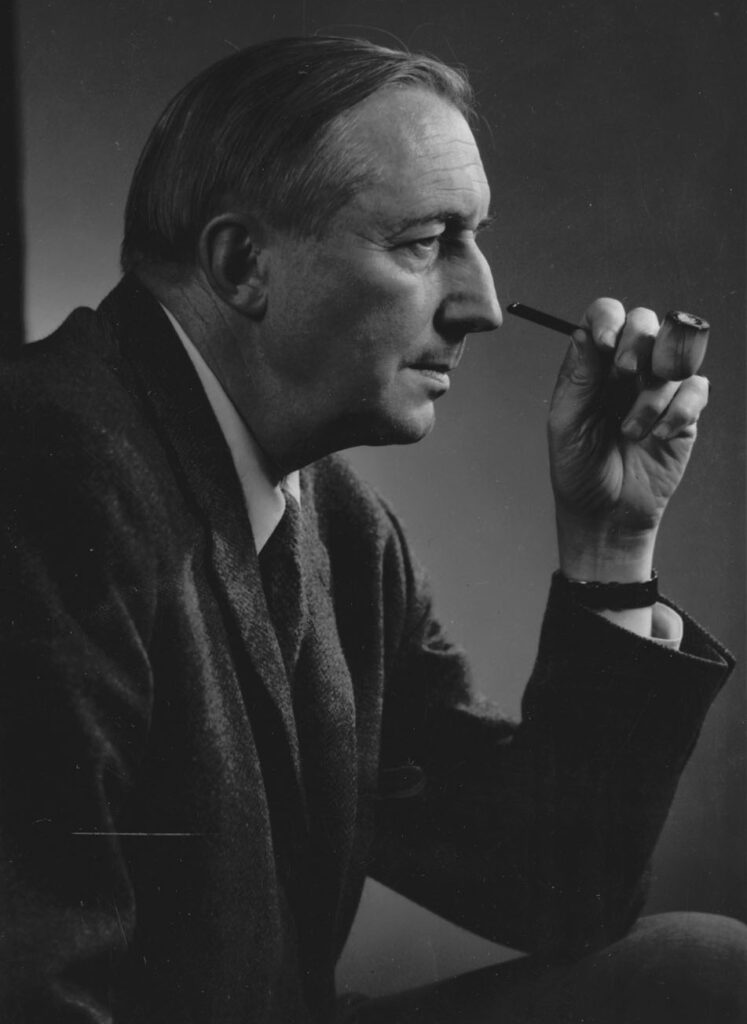
At the time of his death in 1937 a chorus of voices rose from his eulogist, the League President, owners, managers, teammates, opponents, and fans describing Morenz as a gentle and unassuming man, with a sportsmanlike nature – a ‘bon sport.’: Morenz Memorial Fund Program, November 2, 1937, p.6 by Dupuis Freres. He was remembered as a man who neither showed meanness, nor was ever stirred by thoughts of retaliation.
This reputation was not entirely an artefact of his sudden death. It had been Eddie Shore himself who began promoting the idea, as early as 1927, that Howie was loved by all: Eddie Shore, the Montreal Herald, March 29, 1927, and reproduced as “A Top Tribute.” In Roche, Bill, The Hockey Book, McClelland and Stewart (Toronto:1953), at pp.105 – 106. There were also stories that, if believed, supported that reputation too. When Howie knocked out four of Bun Cook’s teeth with his stick, Cook is supposed to have commented:
It was just an accident. Howie wouldn’t pull anything like that intentionally.
in Richard, Maurice “Rocket”, and Fischler, Stan; The Flying Frenchmen: Hockey’s Greatest Dynasty, Hawthorn Books, Inc. (New York:1971), p.48.
Stories about his own genial indulgence towards those who harmed him further cemented that idea about his equanimity. Officials would say “If there were more Morenzes, refereeing would be a job for children.”: attributed to Bill Stewart, in Robinson, Dean; Howie Morenz: Hockey’s First Superstar, The Boston Mills Press (Erin, Ontario: 1982), at p.75.
However many of the same writers who drew those kindly, sunshine sketches of the boy hockey player, and those on the ice who opposed him, also knew that there was turbulence in Howie’s soul. Even at the age of 18 he would get angry and petulant with teammates. W.A. Hewitt and Bobby Hewitson both noticed how the young Morenz could be too easily goaded by opponents into penalties to get him off the ice.
Howie remained testy and aggressive when he arrived at the NHL. By 1931 he seemed to have learned how to harness his anger. He would still smoulder from rough usage, but he was more calculating about how and when to respond.
Now into his eighth professional season, his temper remained part of who he was. He understood that the more aggressively he played, the more goals he scored. He remained willing to take the physical initiative against men like Eddie Shore. His penalty totals were consistently among the highest, but never the highest, on the team. He created and protected his own space as much by attitude and posture as by overt acts of violence.
On this night, Howie was aware of the Forum crowd before he even poked his head into the amphitheater. He breathed in the excitement. His mind was already on the ice. The Canadiens had new sweaters, adding an extra touch of brilliance to the evening. Morenz was visible early, playing at “terrific speed,” like a “madman.”: The Montreal Herald, February 18, 1931, p.6, c.1; The Montreal Daily Star, February 18, 1931, p.27, c.3.
The game continued scoreless into the second period without slackening its pace. Howie took a puck to the face off a Siebert shot. Then McVicar “accidentally” hit him in the head with his stick: The Montreal Daily Star, February 18, 1931, p.26, c.1.
Despite that buffeting, Morenz continued to control the game. Midway through the period, with the teams playing four skaters aside, Morenz unleashed his explosive shot from the Maroons’ blueline:
Tout a coup, . . . Howie, au cour d’une de ces courses a toute allure, tira avec force de la ligne bleu. Avant meme que les deux joueurs de defense et le gardien du Montreal, aussi bien que la grande majorite de l’assistance aient pu realiser ce que se passait, la rondelle etait deja dans le filet des Maroons. Tiree avec une force terrible, la rondelle avait penetre dans les buts de Kerr sans meme que le gardien de buts du Montreal s’en apercoive
La presse, 18 fevrier 1931, p.22, c.1 – 2.
Howie’s shot had traveled 64 feet from blue line to goal line, startled a goaltender who had been playing very well, and gave the Canadiens a 1 – 0 lead.
It put him into the lead for the NHL scoring race for the 1930 – 1931 season, and was also the 200th regular season goal of his professional career – in his 289th game. No Canadien ever scored 200 faster than that! [Neither Didier Pitre nor Newsy Lalonde scored 200 NHL goals. Rocket Richard was closest to Morenz, having scored his 200th in game 308 (January 14, 1949).]
That goal showed him at his best:
Morenz a ete sans contredit l’etoile du Canadien et cela n’a rien de bien surprenant car l’on sait que le fameux centre du Canadien n’a reallement pas son rival dans la N.H.L. Il a ete plus merveilleux que jamais et c’est sans doute cette raison qui a porte certains joueurs du Montreal a voulour le mettre hors de combat.
La presse, 18 fevrier 1931, p.22, c.3
As the game moved into the third period, Maroons’ coach Boucher matched Dave Trottier against Morenz. Trottier was the archetype of the “checking forward.” He had an abrasive style, and was not shy about using his stick as a weapon. One of the punctuation marks of his 10 year, 446 game NHL career – all but 11 games with the Maroons – would be a stick-swinging duel with Dit Clapper in the 1936 playoffs.
About 6 weeks previously Baz O’Meara of the Star had suggested that Trottier should actually “chuck” some of his opponents “under the chin” more often: The Montreal Daily Star, January 5, 1931, p.21, c.4. On this night Trottier had already initiated hard encounters with Lepine, Gagnon and Leduc. He had also been the one who pierced Howie’s lip with his stick just 12 days before.
As the game moved into the final couple of minutes, Morenz pushed the play back down into the Maroons’ end. Trottier chased. Referee Odie Cleghorn explained what lit Howie Morenz’s second explosion with just a minute to play:
“Morenz was coming fast along the boards when Trottier made a lunge at him with a high stick, just missed him, but threw Morenz off balance and then caught him with a butt-end in the chin.”
The Montreal Herald, February 18, 1931, p.6, c.1 – 2
Odie Cleghorn’s observations were reported verbatim in both The Montreal Herald, February 18, 1931, p.6, c.1 – 2 and The Montreal Daily Star, February 18, 1931, p.27, c.3. Cleghorn explained that when the butt-end stiffened against Howie’s chin:
Morenz retaliated with a drive at Trottier and as the latter was falling, Morenz swung his stick, and caught Trottier in the mouth with the blade.
It was known among those who played the game that opponents could be killed by stick swings to the head. Even the toughest players viewed stick swinging as violent.
Whether justifications might have existed in Howie’s mind for his behaviour, it was evident that his reputation for good natured equanimity and sportsmanship could tear. This was Howie Morenz’s game at its ugliest and most dangerous.
Howie headed directly to the penalty bench. When Trottier followed, he kept one hand to his mouth as if he was either counting teeth or holding in blood:
Lorsque Dave Trottier arriva a son tour, il n’y a porta aucune attention, mais tout a coup, sans crier gare, le porte-couleurs du Montreal se jete sur Morenz et commence a la frapper de ses deux mains. Furieux de cette lache agression, le centre du Canadien se defendit de son mieux et reussit a porter plusieurs solides coups a son adversaire . . .
La presse, 18 fevrier 1931, p.22, c.1.
There may have been some words between them, then a “rash of socking” on the penalty bench, and then fighting that spread from the ice into the stands, and then back onto the ice.
While modern observers of the game might blanch at the frank and harsh violence, Howie Morenz never played in a league that protected players much against destructive violence. In fact, The Montreal Daily Star described this very game as:
. . . good hockey, sufficiently aggressive to suit those who like it that way without deliberate fouling: The Montreal Daily Star, February 18, 1931, p.26, c. 2
There was another thing going on that night. Everyone in the League knew that Eddie Shore could knock Howie cold with his stick without disturbing their mutual sense of legitimate athletic competition. They could scrape each other with the shaft or butt ends of their sticks and shrug off the bloody consequences, even in a hotly contested playoff game.
It was when Morenz faced an opponent whom he resented, or did not respect, that he chose to wield his violence. The reason, or rationale, was that Howie Morenz was playing as one of the Canadiens, and Trottier – a Franco-Ontarien from Pembroke – was playing for the Anglo Maroons.
McGill University law professor Frank Scott had a fond, but somewhat arm’s length, relationship with the game of hockey. He had played a bit at a party in Westmount several years before. When he got off the ice, his heart still beating a little faster than normal, and his skin a little flushed from the effort, he had met the woman who became his wife: Djwa, Sandra; The Politics of Imagination: A Life of F. R. Scott; McLelland and Stewart (Toronto:1987), at p.78 – 79. That had been in January 1925. Now, in the winter of 1931, he preferred to spend his free weekend time taking the train out of town to St Sauveur, and ski-ing with her in the Laurentians: Djwa, at p.135.
Being a serious young man, and a thinker, Scott didn’t have much use for professional, spectator sports: as expressed in his poem “General Election 1958”, The Collected Poems of F.R. Scott, McLelland and Stewart (Toronto:1982), at p.79: “When the Grey Cup is over the Stanley Cup begins . . . .”
But having been trained in the law, and having the soul of a poet, he had an appreciation for the dynamics and burdens and consequences of human relationships. He was well-suited to the task of sorting out where the explosive violence that stirred Morenz’s game came from when he was playing against the Maroons.
Frank Scott would have cared little for the specific intensities of the Maroons/Canadiens’ relationship. He would have been skeptical about how a rules-based game like hockey could carry on despite repeated breaches of its own rules. He would question how important rules could be regarded as inapplicable, or flouted, or even excused, while still describing the athletic occasion as a “game,” even as there was no doubt that there was an appetite for this kind of thing among the fans:
He wondered if it was because they didn’t understand hockey. Or if the fascination of fights was more compelling than the excitement of a fast-breaking play. Being honest, he knew it was both.
from Childerhose, J.R.; Winter Racehorse, Peter Martin Associates (Toronto:1968), at p.196.
See also: Michener, James A.; Sports in America, Random House (New York:1976), at pp.428 – 429, 438 – 439.
The idea of purposeful violence was troubling all on its own. Yet it seemed accepted not only by the fans, but also by the athletes and the referees themselves:
At its best this model of masculinity defines a real man as a decent person of few words, but with a powerful sense of his own abilities and the toughness and physical competence to handle any difficulties that might arise; a man that people respect and look up to but don’t dare cross; a man who generally respects the rules that govern social life, but knows how to work outside them if necessary.
Gruneau, Richard, and Whitson, David; Hockey Night in Canada, Garamond Press (Toronto:1993), at p.191
Those who understand the playing of potentially violent games by adults as contests of skill, power, and dominance, and often man against man, appreciate that violence is both a tool, and a measuring stick of achievement:
. . . sports, especially contact team sports, teach boys that it is okay to commit violence against another. Violence, in the name of victory, is acceptable because victory is the symbolic method by which masculinity is distributed in a postindustrial culture. Sport essentially institutionalizes, sanctions, and normalizes violence against other boys and men, something that is perhaps made more visible in the employment of so-called goons in hockey . . . acceptable in the sport as it is naturalized as “just part of the game,” . . . .:
Anderson, Eric; In the Game: Gay Athletes and the Cult of Masculinity, State University of New York Press (Albany:2005), at p.33
F. R. Scott might well have understood and agreed with the perspective of Michael Novak, that:
Standards of fair play, honesty, courage, scrappiness, law-abidingness, excellence, perfect execution, etc., are all dramatized in a baseball game, in football, and in basketball. These are standards difficult to meet in the contests themselves, in the industry that makes them possible, and in the rest of life. As we have seen, these standards belong not to the players, who may not embody them, but to the inherent structure of the game. Without such standards in its ritual structure, a game could not be played; it would be meaningless. Without such standards in a culture, human beings could not complain of vice, corruption, or incompetence.
Sports are not a sufficient vocabulary of forms for a whole human life; but they are a fundament, a basic vocabulary, around which it is possible to build an ampler human structure.
Novak, Michael; “Jocks, Hacks, Flacks, and Pricks” in Vanderwerken, David L., and Wertz, Spencer K., eds.; Sport Inside Out, Texas Christian University Press (Fort Worth, TX:1985), 553, at p.564
Scott understood that violence within sport was a moral issue, as much as gambling, and as much as cheating. These issues are also confronted in Hall, Ann, et al.; Sport in Canadian Society, McClelland & Stewart Inc. (Toronto:1991), at pp.213ff. Interestingly, part of the debate about violence in hockey involves a negotiation of the meaning of “violence,” and which aspects of the violence might be “legal.”
But Scott would still have believed that the violence was something that could infect and then consume a whole team, a whole society, and a whole world. Having lived in the Montreal of Morenz’s time, Scott described the impetus that may have seized both Trottier and Morenz on that particular evening at the Montreal Forum in a poem he titled “Enemies”:
Because we hate you
We cannot escape you
We struggle to reach you
Absorbed by your movements,
We study your plans,
We report every word you say.
Though determined to kill you
in destroying you we mate with you.
The aftermath is our joint child.
“Enemies”, Collected Poems, supra, at p.104.
For further contemplation of this issue, see also: O’Malley, Martin; Gross Misconduct: The Life of Spinner Spencer, Penguin Books (Toronto:1988), at p.85; and Scanlan, Lawrence; Grace Under Fire: The State of our Sweet and Savage Game, Penguin Books (Toronto:2002), at p.202.