
Howie Morenz Becomes “the Nonpareil”
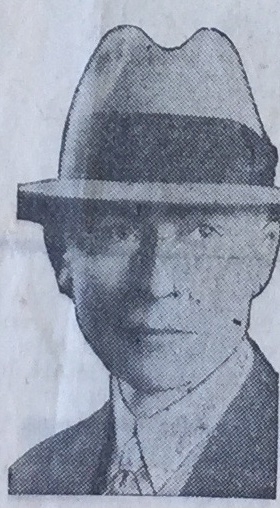
Sports writers were responsible for much of the hype of athletics, and for the rise in interest in professional athletics and athletes as actors in the theatrics of sport, during the 1920s. From the time of his play as a junior, until his death and even after, Morenz lived with increasing amounts of that kind of coverage.
What was special about that time? Paul Gallico explained it this way in Farewell to Sport, International Polygonics, Ltd. (New York:1990), at p.103
It was the beginning of the era of personal publicity. . . . He was always news. He was news in his friendships, in his courtship, his love-affairs, and his marriage, his home life, his hobbies, his lawsuits and accidents, his trips and travels, his troubles and his quarrels, the birth of his children, the death of a relative.
The grandness of the spectator sport industry required poetry rather than strict reportage. The times required writers like Grantland Rice, Damon Runyon, and Paul Gallico himself:
Poets were needed to celebrate the miracles we were observing on every hand . . . . Here was not only drama but wit and humor and expansion of the language. Where ordinary words were inadequate to tell the tale, these men made up their own. They bestowed unforgettable sobriquets on teams and individuals, and coined slogans in use to this very day.
Gallico, Paul; The Golden People, Doubleday & Company, Inc. (Garden City, NY:1965), at p.293
Elmer W. Ferguson of the Montreal Herald, and Charles Mayer of Le petit journal took unabashed responsibility for inflating the vaunted public persona of Howie Morenz. They supplied the generous text that served to expand the magnificence of Howie Morenz in the 1920s. In turn, both of them traded on the fact that they were, or had been, his “close friend.” [from 1965 Sportsman’s Association of Montreal Golf Tournament. Typed remarks of introduction by Charles Mayer: Charles Mayer Fonds, MG30-C76, volume 12; Library and Archives Canada].
Mayer continued to think and to write about Howie Morenz as the greatest hockey player, or nearly the greatest hockey player, to have ever lived until his own death in 1971. Perhaps because of the closeness in their ages, Mayer seemed less self-aware of his role as a Morenz publicist than Ferguson. In that respect his reportage about Morenz seemed more innocent and enraptured.
Journalists of this time, Ferguson and Mayer among them, quickly learned that the subjects of their reporting would be more interesting if their challenges were monumental. As Jim Murray would explain:
Contests are merely contests without dramatization. It is sports writing which defines the quest, spins the myth, and makes us care. – Jim Murray
In Poe, Randall; “The Writing of Sports,” in Vanderwerken, David L., and Wertz, Spencer K., eds.; Sport Inside Out, Texas Christian University Press (Fort Worth, TX:1985), 534, at p.552
Ferguson and Mayer would both inject their personal relationships into their stories about Morenz. Ferguson would earn a good supplemental income from his personal “Howie Morenz” stories which he repeated, true or not, for the next 40 years. Mayer was Ferguson’s French-speaking alter-ego. Mayer and Howie were the same age. Mayer had been writing for La Patrie and Le petit journal since Morenz arrived in 1923, and devoted himself constantly to the mission of burnishing Morenz’s reputation among his readership. Even the “senior” Baz O’Meara at the Montreal Star would get into the act, writing at the time of Morenz’s death:
It is difficult to write in a detached way about Howie. Most of us who write sports were so close to him that we feel almost a sense of personal loss.
Baz O’Meara [quoted in The Stratford Beacon-Herald, March 11, 1937, p.11, c.4 – 5]
All of that made Albert Laberge of La presse quite atypical of those on the sportswriting beat in Montreal. Laberge was an aesthete. He had been with La presse since 1900, even though he preferred to write poetry, and about art. He had already published a novel about Quebec rural life: La Scouine, http://docplayer.fr/73934203-Albert-laberge-la-scouine.html (1918).
There had been no challenge in adjusting his voice to the dialect and routine of the sports page. He could make a pretence of the hyperbole and hucksterism to promote attendance for the local games. His task was often no more onerous than translating The Gazette’s stories about out of town games.
Born February 18, 1871, Laberge was about to turn 60 years of age. He was much older than the rest of the sports writing fraternity. He had no desire to be chummy with the players. His son, among others, felt that he actually feigned his interest in sports, and perhaps truly detested them: e.g., Anthologie d’Albert Laberge, Le Cercle du Livre de France Ltee (Ottawa:1962), at p.III. However, he was quite willing to partake in the perquisites of being part of the sportswriting fraternity.
He had begun to lean towards the idea of retirement. He had been freed from the authority of the church when his novel had been denounced as an “ignoble pornographie,” and he himself as “Le pere de la pornographie au Canada.” He had never been beholden to the National Hockey League. He had reached the stage of his career when he felt utterly free to express his own judgments, and to choose his own words.
Laberge’s sportswriting had moved beyond mere coverage into interpretation: Michener, James A.; Sports in America, Random House (New York:1976), at p.319. He was able to express an opinion about why things had happened, and the significance of what had happened, on the field of play, sometimes without explicitly describing the details of the game at all.
Novak, Michael has described this, in “Jocks, Hacks, Flacks, and Pricks,” in Vanderwerken, David L., and Wertz, Spencer K., eds.; Sport Inside Out, Texas Christian University Press (Fort Worth, TX:1985), 553, at p.563:
The essential craft of the sportswriter is mimetic: to recreate events, to imitate and to reveal their form, to catch new sides to their significance. The craft is more like that of the novelist or dramatist than like that of the investigative reporter.
Sure of his mission, and equipped with both literary imagination and poetic insight, Laberge stepped apart from his fellows in this game, criticizing Conn Smythe’s arrogant behaviour with the same revulsion as he had depicted an election confrontation between “rouge” Quebecois farmer and a conservative Anglais “bleu” in his novel: Laberge, Albert; La Scouine, http://docplayer.fr/73934203-Albert-laberge-la-scouine.html (1918), at Chapitre XIX, p.68ff.
After recounting Smythe’s martinet-like grandstanding between periods, Laberge launched into his own finger-wagging diatribe:
Il y a aussi eu une bataille de mots dignes des politiciens les plus emportes. On s’est eng…….. a son gout et meme les arbitres se sont fait lancer d’injurieuse epithetes par les joueurs. Les adversaires se sont apostrophes avec des expressions dignes des plus illustres cochers d’autrefois. Morenz, Leduc, Burke et Larochelle ont epuise tous les verbes de la premiere conjugasion pour repondre aux souhaits de Horner, Conacher et Jackson des visiteurs. Le gerant Connie Smythe du Toronto a lui-meme servi une veritable harangue aux arbitres, les traitant avec des expressions qu’il est interdit de reproduire dans les journaux. Des spectateurs se sont aussi oublies et nous avons entendu certaines dames en grandes toilettes de soiree et certains monsieurs en tuxedos, gens d’habitude plus froids que la couche de glace, oublier leur code d’etiquette et se porter a ses violences de langage vraimment etonnantes. D’autres spectateurs, qui se tenaient au-dessus de la porte de sortie des joueurs du Toronto, ont lance de veritables insultes aux visiteurs au grand risque de faire blesser les journalists assis au premier plan. Furieux de ces insultes, les joueurs du club de la Ville Reine ont failli lancer leurs batons parmi l’assistance. Clancy et Cotton inviterent quelques spectateurs a descendre de leur siege et a montrer s’ils etaient aussi forts en action qu’en paroles.
La presse, 4 fevrier 1931, p.23, c.1 – 2
At its heart, Laberge was reporting Smythe’s degraded approach to the game of hockey, and Smythe’s dismissive attitude toward French Canadians. Even though what he wrote appeared on the sports pages, Laberge was on longer just writing about hockey games. He had distilled meaning from incidents which the Star and Gazette had either missed or trivialized. His references to police and armed force resonated with an audience attuned to manifestations of economic and cultural class control.
Laberge was using his space to express judgments about vital social issues – including judgments which touched on “the national question” among his readers. Laberge described the moral significance of these games beyond the sporting world, putting the game, and its players, into a context for his readers.
It was Laberge who first articulated an understanding of the Canadiens as the allegorical warriors of an oppressed and disrespected national community within Canada.. It was a path eventually recognized by many others into the 1970s: Dryden, Ken, “Preface” at pp.7 – 8, and Salutin, Rick, “Introduction” at pp.13 – 16, 19 – 21, in Salutin, Rick; Les Canadiens, Talonbooks (Vancouver: 1977); Whitson, David, and Gruneau, Richard; Artificial Ice: Hockey, Culture, and Commerce, Broadview Press (Toronto:2006), at p.36.
Laberge initiated the idea of the function of the Canadiens as an expression of this social conflict. Again, this was something identified and discussed in Howell, Colin D., Blood, Sweat, and Cheers: Sport and the Making of Modern Canada, University of Toronto Press (Toronto: 2001), at p.5. The same thing would become the case for the media covering les Nordiques in Quebec City during the 1980s: e.g., Cuthbert, Chris, and Russell, Scott; The Rink: Stories from Hockey’s Home Towns, Viking (Toronto:1997), at p.246 – 248. For Laberge, nothing that happened on the ice was incidental.
Laberge was astute enough to understand the game as a demonstration – not just a metaphor – of how a “bouillant” Conn Smythe felt free to abuse and denigrate Canadiens, as well as the Canadiens. He would be the writer who pointed out how Smythe berated one of the few French Canadien NHL referees, Eusebe Daigneault: La presse, 4 fevrier 1931, p.23, c.3, in this case also reported in The Montreal Daily Star, February 4, 1931, p.25, c.3.
He derided Smythe for his ironic attack on the team wearing Canadian colours:
Smythe ne tenait pas en place et a tout instant, il se levait de son banc soit pour encourager ses joueurs a la rudesse et les applauder chaque fois qu’il faisait tomber un adversaire. [. . . ] pour applauder ironiquement les portes-couleurs du Canada: La presse, 4 fevrier 1931, p.23, c.3
Laberge was neither a partisan nor a publicist. He had no time for mindless enthusiasm about professional athletes. He was the true senior voice among the sports writing fraternity in Montreal. He claimed the insight of a novelist and the emotional engagement of a poet. It was he who possessed the moral authority and the capacity to appreciate and express what was important about professional hockey in Montreal.
That was why it was particularly important when Laberge decided that it was essential to declare that Howie Morenz was the epitome of the professional hockey athlete in Quebec society. The status of Morenz in the game was unequalled.
First, there had been Morenz’s dashing, unassisted goal in the first period. Laberge was the only reporter to mention Red Horner’s involvement in the play. It was not only a triumph against Chabot, but Morenz’s personal repudiation of the man who had hacked his ribs, and had invalided him for two games:
Les applaudissements n’avaient pas encore cesse que Happy Day se faisait punir et avec deux hommes du Toronto a la cloture, Howie Morenz enleva la rondelle a Red Horner a la defence du Toronto et en un rein de temps, il se trouvait seul devant Chabot . La presse, 4 fevrier 1931, p.23, c.1 – 2.
Second, Morenz had overcome the Leafs’ targeted campaign of abuse:
C’est surtout a Morenz qu’en voulaient les joueurs du Toronto et Conacher, Cotton et Horner ont tout fait en leur possible pour lui faire perdre son sang froid et meme pour chercher a le demolir. Howie s’est toutefois venge en comptant un point et en aidant a faire scorer l’autre: La presse, 4 fevrier 1931, p.23, c.3
Third, Morenz had personally earned his place of attention and adulation:
En depit des tentatives de ses adversaires pour le mettre hors de combat, Morenz a ete l’etoile de la partie. . . .
Morenz a fait une foule de courses de toute beaute et est venu en nombre d’autres circonstances bien pres de scorer. Le centre du Canadien a recu nombre de coups et a deux or trois reprises, il est etendu sur la glace avec une force terrible. Il est neanmois releve a chaque fois pour continuer la lutte de plus belle: La presse, 4 fevrier 1931, p.23, c.2 – 3
Albert Laberge was watching Howie Morenz at the zenith of his powers as a hockey player. Instead of gushing forth with the well-worn hyperbole about the Mitchell Meteor, Stratford Streak, or even “l’homme éclair,” Laberge felt a moral responsibility to speak what he believed to be the important truth about what he had seen. Within the next two weeks he described Howie Morenz as:
Le prodigieux . . . l’incomparable Howie . . . La presse, 18 fevrier 1931, p.22, c.1 – 2
. . . sans contredit l’etoile du Canadien et cela n’a rien de bien surprenant car l’on sait que le fameux centre du Canadien n’a reelement pas son rival dans la N.H.L. Il a ete plus merveilleux que jamais . . . . La presse, 18 fevrier 1931, p.22, c.3
After taking some more time for sober reflection, Laberge finally confessed to what Howie Morenz had proved himself to be, anointing him on February 28 as:
Le Nonpareil
La presse, 23 fevrier 1931, p.18, c.1; La presse, 28 fevrier 1931, p.18, c.1. See also La presse, 28 fevrier 1931, p.18, c.2, spelled as “le non pareil”
While a few in the English media had been moving in that direction, and had been acknowledging that he was “the peerless Morenz,” or “The Matchless, ” or “the Magnificent Morenz,” and Charles Mayer himself 20 years later could find no better way to describe his friend as the “nulle autre pareille,” none of these monikers truly and entirely captured what Laberge was expressing in the mid-winter of 1931.
Leo Dandurand understood what Laberge was talking about, saying at the time of Morenz’s death to Le petit journal, 14 mars 1937, p.51, c.3:
Dans sa carriere meteorique, Morenz a ete comme pas un dans le hockey professional.
Without any sense of obligation to the player, his team, or his league, Laberge had recognized and acknowledged Morenz as the “Nonpareil,” the player who could defy and overcome the brutish attacks of the Canadiens’ opponents. He was the player who deconstructed the arrogance and pretensions of opponents. He was the player who championed the cause of a subject people.
Laberge had recognized and acknowledged Morenz as one of “des Canadiens anglaise qui combattent pour nous.”: An expression also coined by Leo Dandruand, quoted in Lalancette, Mikael; Georges Vezina: L’Habitant Silencieux, Les Editions de l’Homme (Montreal: 2021), at p.333.
The sobriquet never did translate for the rest of Canada and North America. When I was considering what to call the book that eventually emerged from my own research, I was eager to use “The Non-pareil” as my working title. It had the kind of differentiating panache as nicknames such as “The Great One,” or “The Rocket.” I proved incapable of convincing my wife, or my publisher, that “The Non-pareil” was a great and marketable title. But it is the title that I keep in my mind every time I find myself thinking of Howie Morenz.
Thank you, Albert Laberge.