Hockey Night in Montreal as an Event
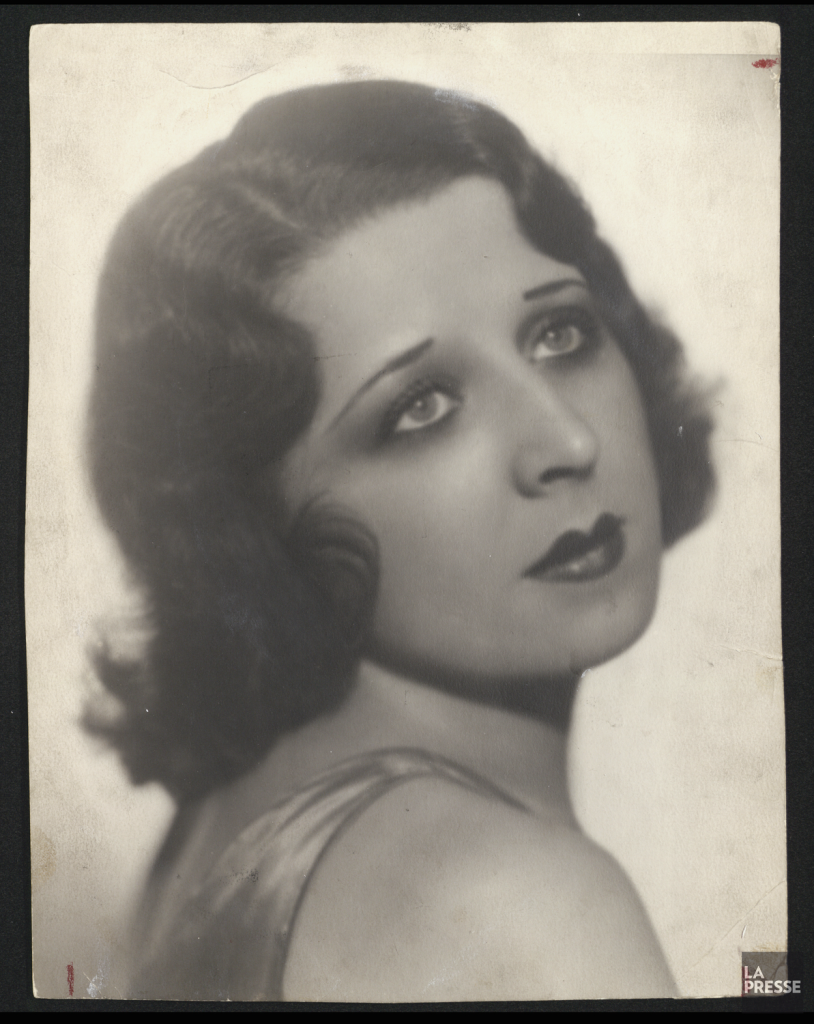
The Canadiens’ last home game before Christmas was a Thursday night contest pitting the NHL’s Canadian Division first place Canadiens against the American Division’s first place Black Hawks.
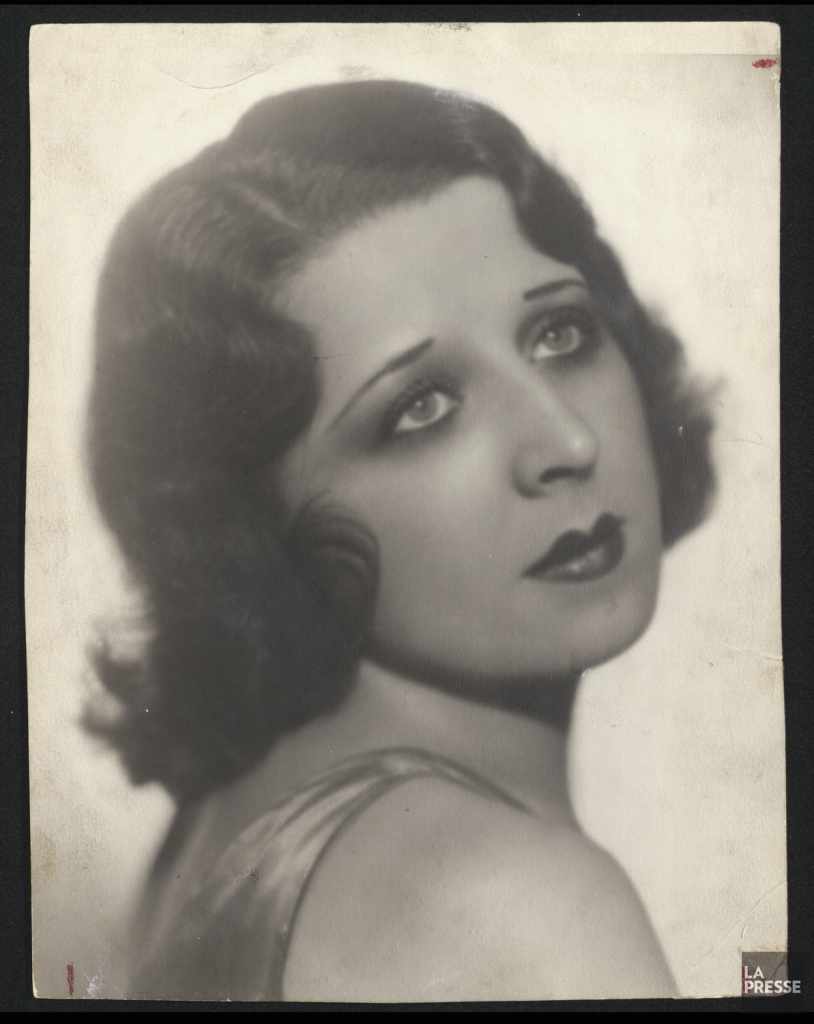
Canadiens’ management gilded the anticipated charm and glitter of the game by inviting a young local actress with international cachet to drop a ceremonial opening face-off. Germaine Giroux, just a few months younger than Morenz, had grown up in nearby St Henri. She had been working regularly in New York since 1927, and had just completed a nearly six month Broadway run of Ladies All on December 13, a comedy which had opened on July 28 and was now closed after 140 performances.
She was in Montreal, she said, for “a little Christmas holidayâ€: The Gazette, December 19, 1930, p.20, c.3.
Fans started gathering at the ticket wickets at the Forum’s St Luke street entrance at 4 in the afternoon. By game time at 8:30 pm, the crowd had filled the Forum to capacity. Standees were three and four deep: La presse, 19 decembre 1930, p.34, c.4; The Gazette, December 19, 1930, p.20, c.3.
Morenz and Giroux were both on a trajectory towards triumph in their chosen careers, now standing together at centre ice at the Forum. The two young entertainers smiled while they shook hands, sharing the buoyancy of each other’s fame, but still conscious of the power of their own – and both of them relying upon the other to cement their temporary celebrity as Montreal’s most adored entertainers.
Giroux actually only had one more turn on Broadway (49 performances in Miracle at Verdun, which would open on March 16, and close in April, 1931). Her subsequent career would grow into film, radio, and television projects through to the 1970s, with a companion career on the stage in Montreal as well as in Stratford, Ontario, into the 1950s and 1960s.
The Montreal Daily Star, December 19, 1930, p.42, c.1 wrongly identified Giroux as a “young film starâ€. That part of her career had not yet arrived. Quebec’s main female film star at the time was actually Fifi D’Orsay (Marie-Rose Lussier), a former vaudevillian who had 8 film releases between 1929 and 1931, including Hot for Paris, Women Everywhere, and Those Three French Girls.
The Canadiens continued to recruit local celebrities to conduct ceremonial puck drops for the rest of the season.
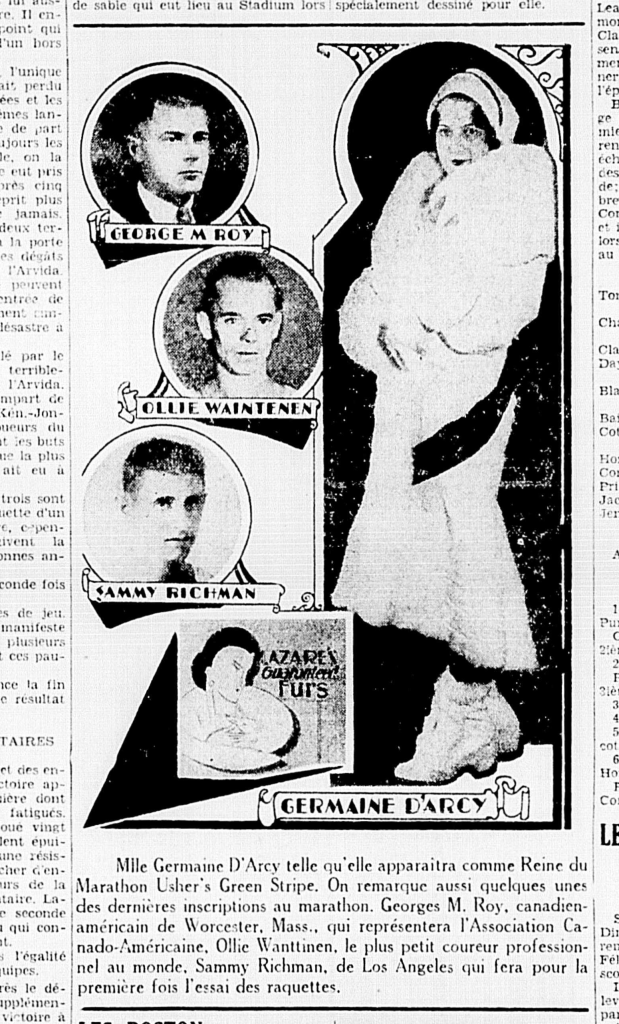
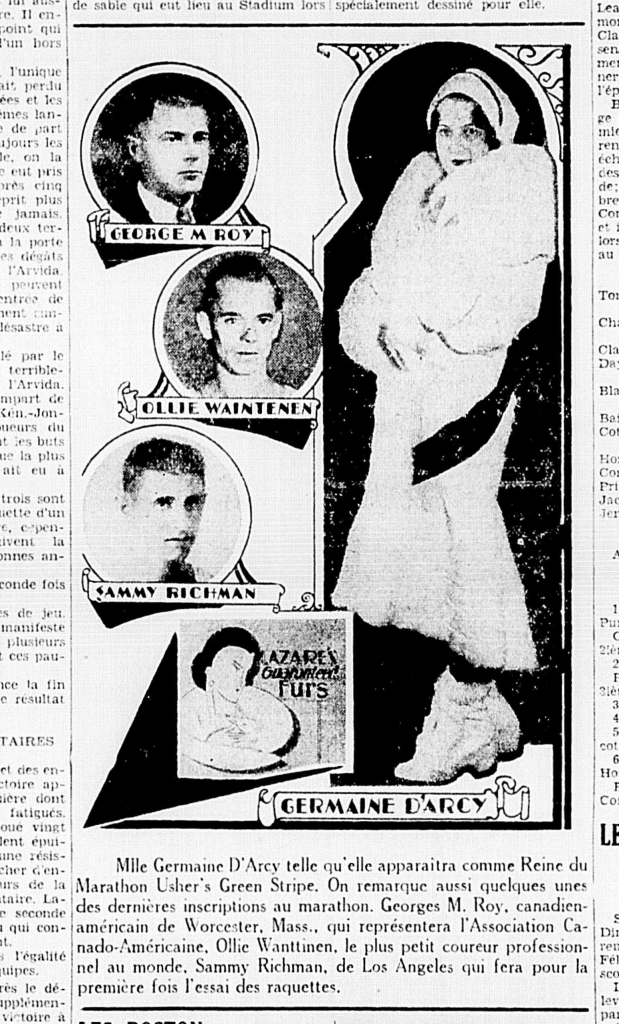
On January 15, 1931, it was “screen actress†Germaine D’Arcy, who appeared to look very much like Germaine Giroux. She would drop the puck between the Canadiens and Maroons. D’Arcy had won the beauty contest to become Queen of the Bronfman-sponsored Ushers’s Green Stripe Snowshoe Marathon. D’Arcy’s attendance was greeted with uncharacteristic sexual frankness:
Miss Germaine D’Arcy who won the Ushers Green Stripe snowshoe race beauty contest faced the puck. A lot of the boys were wishing they were the puck, but only when Mlle D’Arcy handled it. (Montreal Herald, January 16, 1931, p.8, c.4).
On January 29, 1931, for a home date against the Philadelphia Quakers, the game began with a musical presentation by the 30-piece Royal Montreal Regiment marching band, which also included playing the national anthem, and intermission entertainment: La presse, 29 janvier 1931, p.30, c.2. The ceremonial puck drop that night was done by nearly 4-year old Howie Morenz, Jr. (see Chapter 27).
Then again, on February 7, 1931, a ceremonial puck drop was made Frank Hoey. The Forum was engorged with fans and out of town reporters for the game against the Bruins, creating a winter carnival atmosphere in the building:
L’immense edifice etait absolument rempli. Non seulement tous les sieges etaient occupies, mais il devrait y avoir quinze cents spectateurs debout. (: La presse, 9 fevrier 1931, p.21, c.1 – 2. See also: The Montreal Daily Star, February 9, 1931, p.22, c.2)
Hoey was about to win the week-long, 200 mile, Quebec City to Montreal, snowshoe marathon that had been promoted by Germaine D’Arcy at the game on January 15: La presse, 9 fevrier 1931, p.21, c.1 – 2. The race had already led to the death of one of the competitors – a father of 13 – and there was still a stage to run. By the time Hoey dropped the puck at the Forum, Hoey had accumulated an insurmountable 69 minute lead, and would snowshoe into Lafontaine Park the next day to easily claim first prize.
The Canadiens’ habit was to create opportunities for ceremony – even when it wasn’t necessary to sell tickets. The point was to reinforce the idea that centre ice at the Forum was the most important place to be in the city on a game night.
.